|
1
|
|
|
2
|
- Examine the life cycle of a wave
- Focus on wind wave generation
- Focus on Swell
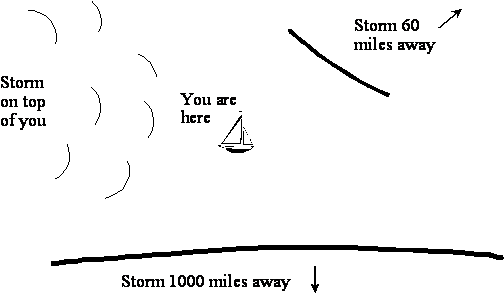
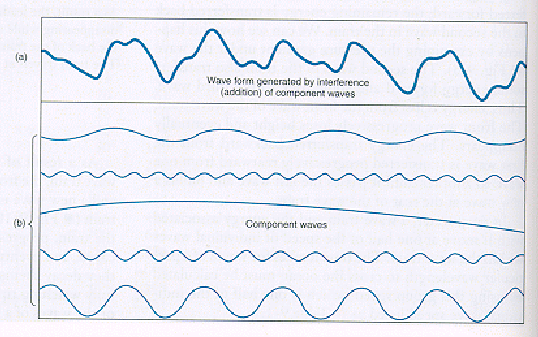
- Real-world sea state with waves and swell
- Describing sea conditions in observations and forecasts
|
|
3
|
|
|
4
|
|
|
5
|
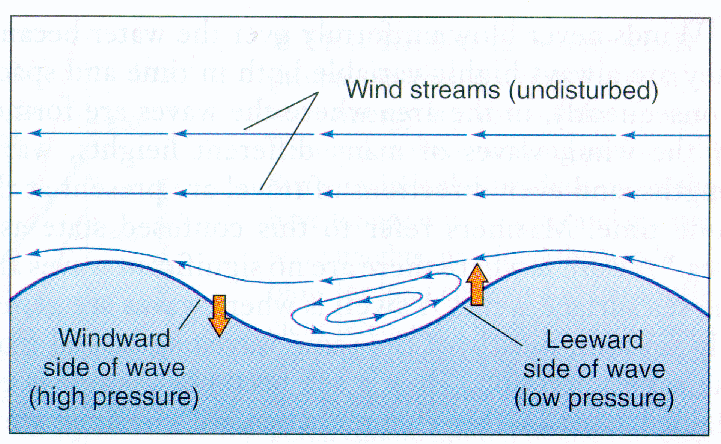
- The wind “drags” the wave with it
- With increased wind speed:
- Increased wave height
- Increased wave speed
|
|
6
|
- With a constant wind, the wave will grow until it keeps up with the
wind.
|
|
7
|
|
|
8
|
|
|
9
|
|
|
10
|
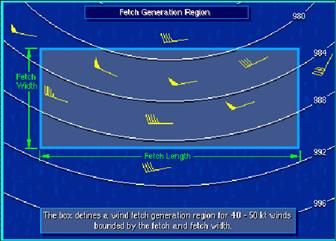
- Factors in wind wave development
- Wind speed
- Wind duration
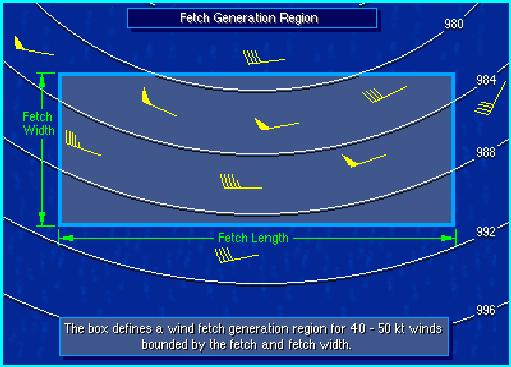
- Fetch length
|
|
11
|
- The higher the wind, the bigger the wave
- Rough relationship: Wave height proportional to square of wind speed
- But...growth limited by duration and fetch
- Wave speed cannot be faster than wind speed (wave “outruns” the wind)
|
|
12
|
|
|
13
|
- Length of time wind blows over a given fetch area
- Longer the wind blows over the
same area, the bigger the waves get
|
|
14
|
- A strong wind that blows over a large area for a long time produces the
biggest waves.
|
|
15
|
- Wind Speed is the ultimate limiting factor
- Waves can only grow to a certain height for a given wind speed = fully
developed
- Wind waves are almost always fully developed for low wind speeds
- Wind waves are almost never fully developed for high wind speeds
- Why?
|
|
16
|
- Fetch Limited
- Offshore winds
- Small, but strong wind
(Thunderstorms)
- Any fetch limited by the
coastline (bay, etc)
- Duration Limited
- Fast moving storms
- Short lived wind (Pre-Frontal
wind)
- Long lived wind, moving away
from fetch area (e.g. a hurricane moving perpendicular to fetch region)
|
|
17
|
- Wind increases
- Wind decreases
- a second group of smaller waves will develop
- original waves become swell
|
|
18
|
|
|
19
|
|
|
20
|
- Waves that are being acted upon by wind that is sufficiently strong, and
in the correct direction, to cause the wave to grow in size, or maintain
their maximum size for that wind.
- “wind speed is equal to or faster than the wave speed”
|
|
21
|
|
|
22
|
- Simple definition: If it’s not
wind wave, it’s swell
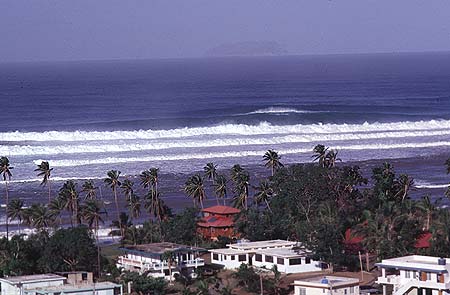
- Waves that have left their generation area, or fetch
- Waves that are traveling faster than the wind, or in a different
direction
|
|
23
|
- Height decreases
- Period, wave length increase
- Crest length increases
- Furthermore,
- These changes occur more
significantly early in a swell’s
life cycle.
|
|
24
|
|
|
25
|
|
|
26
|
- 10 feet by 6 seconds
- 7 feet by 18 seconds
|
|
27
|
- As a swell flattens, it speeds up. Therefore:
- Wave speed increases as it is
being generated by wind, and then when the wind stops (or moderates),
the wave becomes a swell and speeds up as it flattens.
|
|
28
|
|
|
29
|
|
|
30
|
|
|
31
|
|
|
32
|
|
|
33
|
|
|
34
|
|
|
35
|
|
|
36
|
|
|
37
|
|
|
38
|
- Wave height
- Wave length
- Wave direction
|
|
39
|
|
|
40
|
|
|
41
|
- Wavelength is intuitive, but difficult to measure
- Period is the time for one wavelength to pass a point – easy to measure
- L = ~ 5 T*T
|
|
42
|
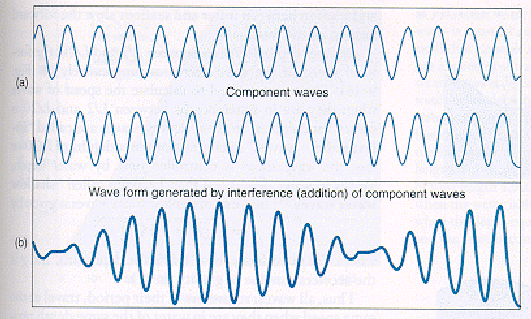
- Best case is to know the period of each wave group present
- Dominant period is that of wave group with the highest energy.
- Note: Low, long-wavelength swell can have have more energy than high,
steep wind waves.
|
|
43
|
|
|
44
|
- Wave steepness
- Degree of confusion in sea surface
|
|
45
|
- Subjective.
- 9' by 9 second is definitely
steep.
- The “square” rule is popular,
but:
- 9x9 implies 9' x 400' (pretty steep)
- 20x20 implies 20' x 2000‘ (not
steep)
|
|
46
|
|
|
47
|
|
|
48
|
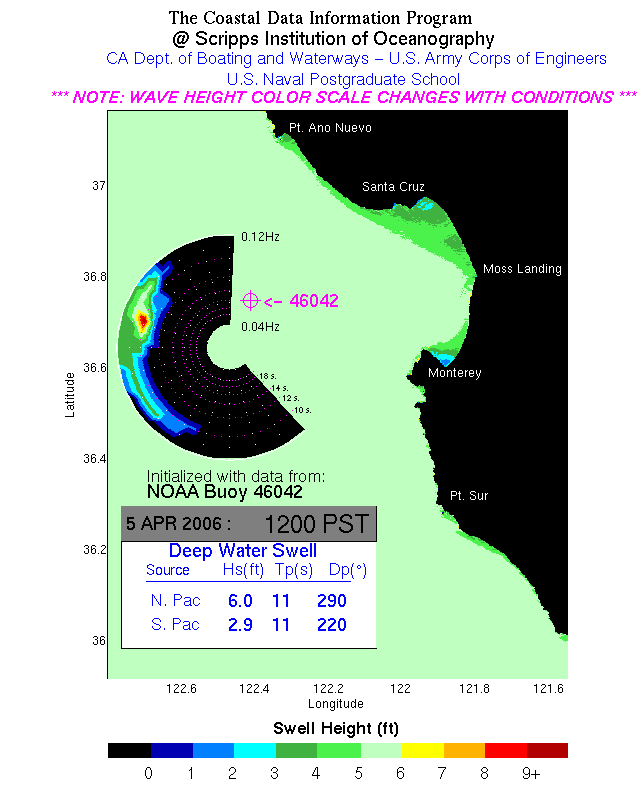
- The NEW Way…
- 4 parameters:
- Swell direction, Swell height,
Swell period.
- Wind wave height.
- Wind wave direction is assumed to be equal to wind direction
- Wind wave period is assumed to correspond to steep wave
- Pioneered by NWS Eureka
|
|
49
|
- Consider:
- - Strong 25-30kt winds generating
a 6 ft wind wave.
- - Meanwhile, 5 ft swell at 15
seconds is coming from the W.
- Using 2 parameters:
- Combined sea height = Sqrt (5*5 + 6*6) = 7.8 ft
- Read as “Seas 8 ft at 15 seconds”
- Doesn’t sound so bad…a nice hilly ride!
|
|
50
|
- Consider:
- - Strong 25-30kt winds generating
a 6 ft wind wave.
- - Meanwhile, 5 ft swell at 15
seconds is coming from the W.
- Now using 4 parameters:
- Read as “Wind waves 6 ft. West
swell 5 ft at 15 seconds.”
- Paints a much different picture.
Wind waves are likely going to be less than 7 seconds in period.
- Therefore, the waves will be quite steep!
|
|
51
|
- The “moral of the story”:
- The more descriptors used to describe sea condition, the better.
- Using only two parameters can be disastrously misleading.
- Indicating wind wave height, swell height, as well as period and
direction of swell is much more describes the sea condition much more
accurately.
- NWS and the research community are working on deploying more “wave
spectrum” buoys.
|
|
52
|
- What other data from the buoy can you use to determine if a wind wave
exists that is not showing up?
|
|
53
|
|

 Notes
Notes